Collection: Available Sadhu Boards
All TENGRY Sadhu Boards
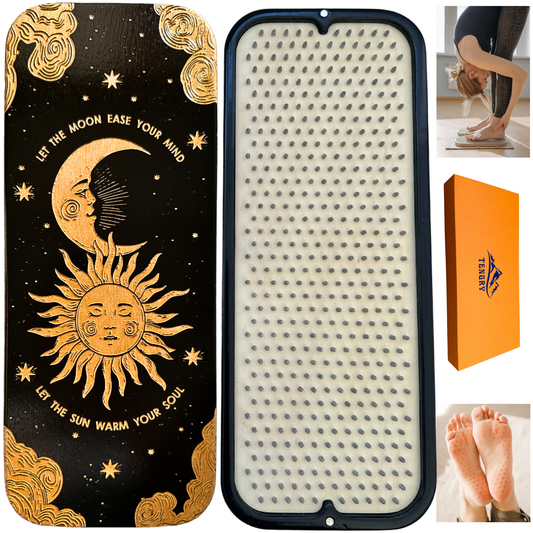
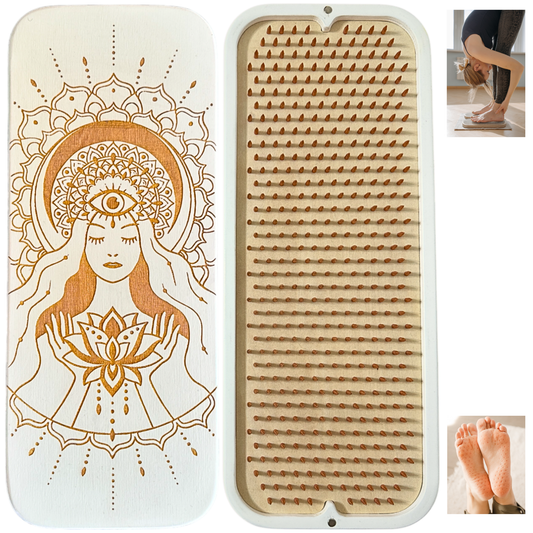
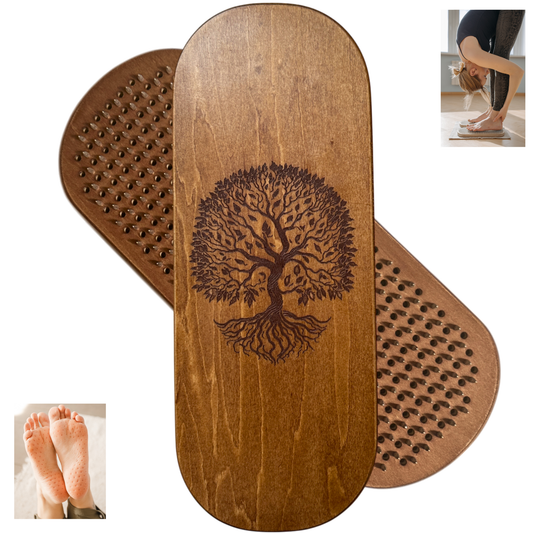
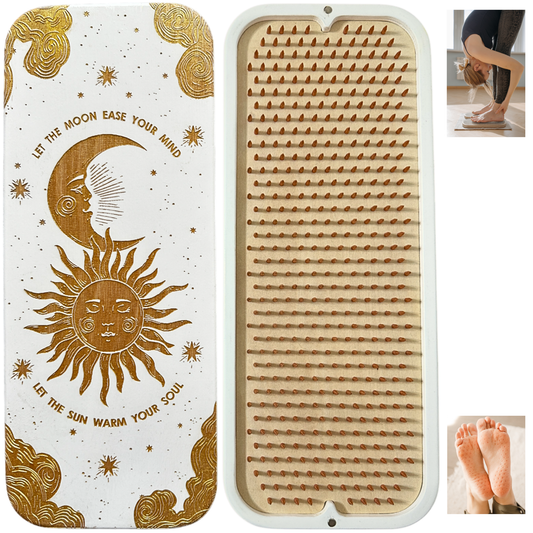
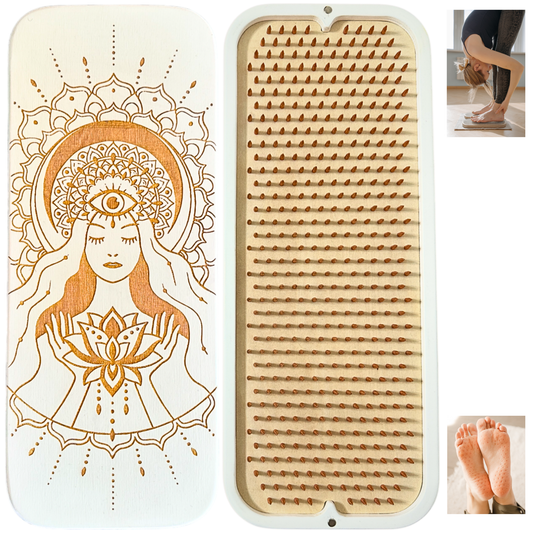
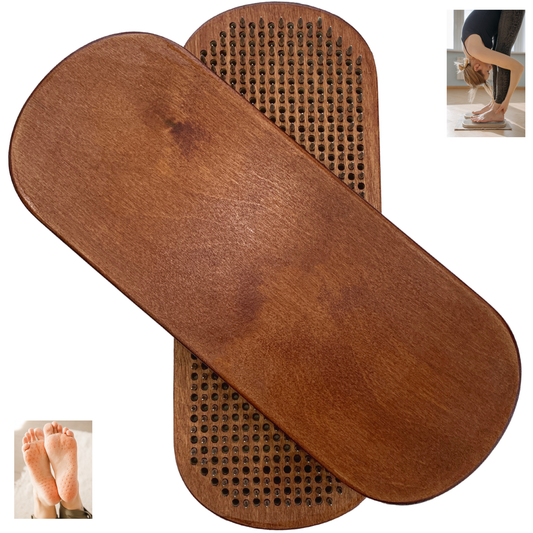
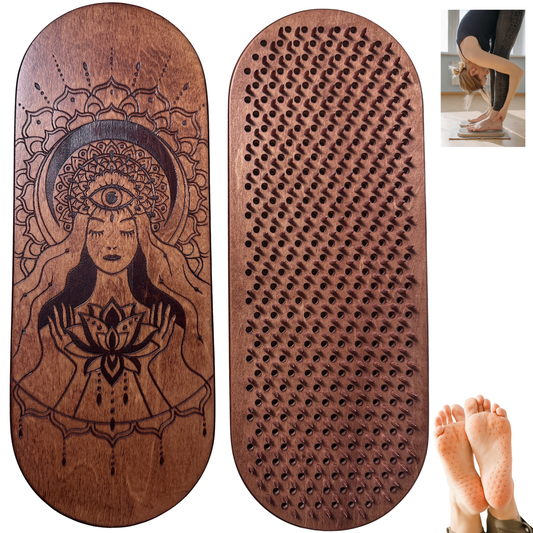
Every handmade Sadhu board we currently make, in one place. All are built on ECO birch plywood with a 3-layer glossy varnish and come as two interlocking halves — one per foot — that slot together for storage and travel.
Two decisions separate the models: how far apart the nails sit, and what the nails are made of. The first sets the intensity. The second sets weight, feel and price.
Step 1 — choose your nail spacing
Nail spacing is the distance between neighbouring nail tips. Closer nails mean more of them under your foot, so your weight spreads across more contact points and each point presses less. Smaller spacing is gentler.
| Spacing |
Level |
Choose it if |
| 8 mm (0.31 in) |
Beginner |
This is your first board, you have sensitive feet, or it is a gift. |
| 10 mm (0.39 in) |
Most popular |
You have stood on nails before, or want one board to grow into. |
| 12 mm (0.47 in) |
Advanced |
10 mm has become comfortable and you want a new edge. |
Step 2 — choose your nail material
|
Aluminum |
Copper |
| Weight |
Around 575 g |
670–895 g |
| Underfoot |
Stays cool longer |
Warms up quickly |
| Hygiene |
Corrosion-resistant |
Naturally antimicrobial |
| Price from |
$69.90 |
$79.90 |
| Best for |
Travel, first board, value |
Daily home practice, gifts |
At the same spacing the two materials feel almost identical. The pressure comes from the nail grid, not the metal.
What comes with every board
- Two interlocking boards, one per foot
- Velvet or textile storage case
- Aroma sticks with a holder
- Gift-ready box
- Free shipping to the US, Canada, Japan and Europe (1–4 business days to the US, Canada, Germany and Japan, 4–7 elsewhere in Europe) and 30 days to return
The Hexagon nail pattern
Every board uses the Hexagon — Flower of Life — arrangement, where each nail sits at an equal distance from its neighbours in every direction. The practical effect is that pressure distributes across the whole sole rather than concentrating along rows, which is what makes a well-built board tolerable at spacings that would otherwise be punishing.
Practising safely
Stand on a stable, non-slip surface with a wall or chair within reach. Step down heels first and lower the foot evenly — never jump on. Start in socks for 10–30 seconds and build gradually.
Do not use a Sadhu board if you have diabetic neuropathy or reduced sensation in your feet, open wounds or fungal infections on the soles, or circulatory disorders, and speak to a doctor first if you are pregnant. Children should only use one under adult supervision.
Want the decision laid out end to end? Read how to choose a Sadhu board — comparison tables for every spacing and material, plus a ten-question FAQ for beginners. Wondering whether you need a board or a mat? See Sadhu board vs acupressure mat.